
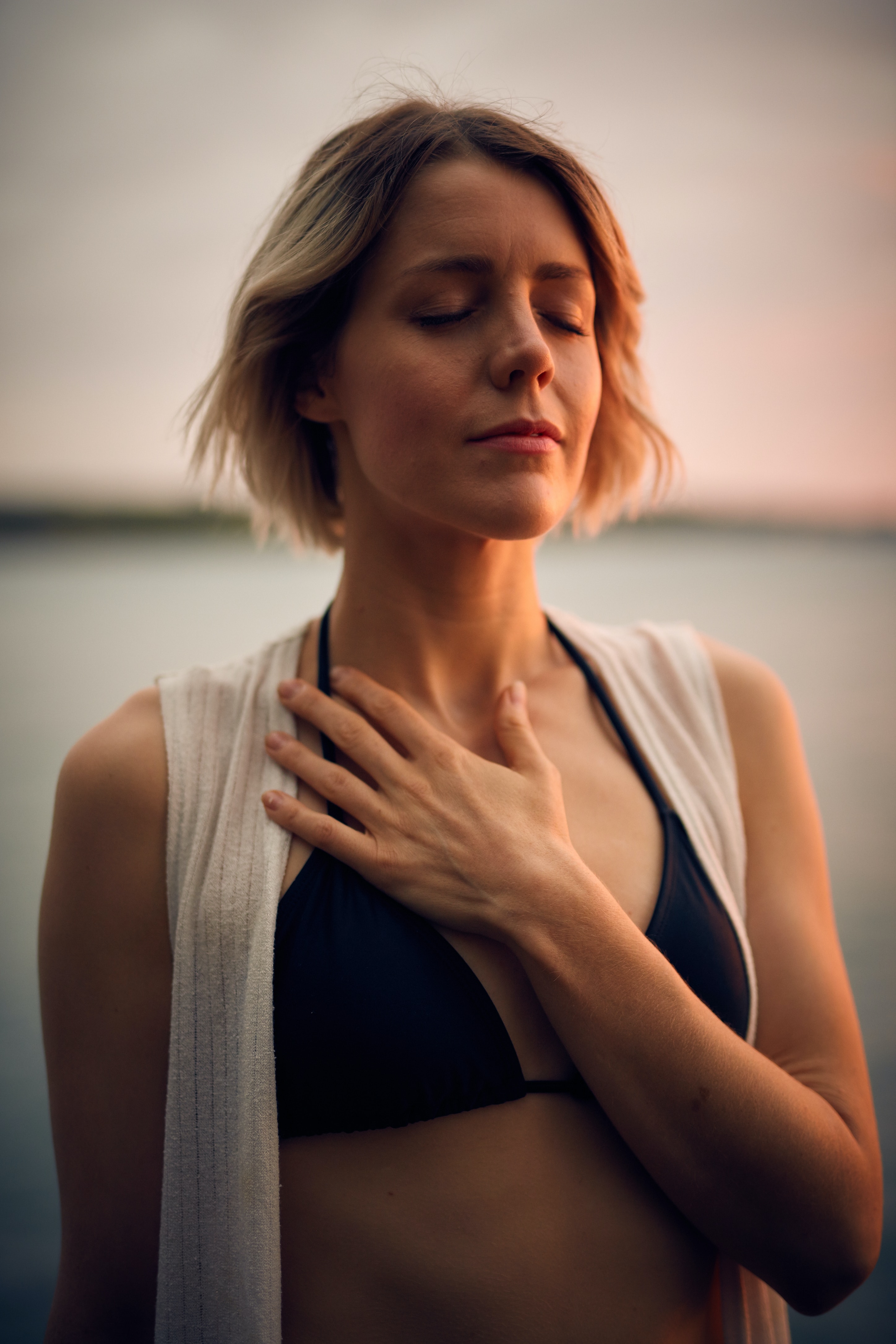
Calm anxiety with simple nervous system ‘hacks’ you can try at home. Anxiety is no joke. But it is a common experience that most of us will have at some point in life. Anxiety can be long lasting, start at an early age or peak into panic attacks. It can manifest as a key factor in other disorders like Obsessive Compulsive Disorder (OCD), depression or eating disorders. It can have a clear set of causes or feel like it appeared from nowhere. Although getting to the root of anxiety will be the best way to manage it long-term, it helps to have little things that can get us through until we have a grasp on the bigger picture.

What is anxiety?
Anxiety is a response of the nervous system to a threat. The threat can be real or imagined. It can be a threat to safety or to self image. Whether or not we are aware of the threat being picked up by our nervous system, anxiety tells us that something is being seen as potentially threatening on some level.
Once a threat is picked up (in our environment or in our thinking) the brain and body release a number of chemicals and hormones that get the body and brain ready for action. Breathing speeds up, heart beats faster, mind becomes either very focused or very fuzzy. We can’t control how the hormones affect us and people can have different anxiety symptoms at different times.
3 way to ‘hack’ your nervous system to get relief from anxiety
Here are some simple practices that can calm anxiety using breath, physical sensation and grounding. Key tip in using anxiety management skills of any kind is to be realistic. It is probably not realistic to make the anxiety disappear. But it is reasonable to see if it can be reduced a little – enough to give you more space to think, engage with your surroundings and make it through. Although anxiety can return or last a while, it can’t last forever. Sometimes we have to just knock down the intensity a little so that we can carry on until it passes.
1) Use your breath to relieve anxiety
As simple as it seems, our breath is a key that unlocks many doors and is a great way to calm anxiety by affecting your nervous system. When anxiety hits, the breathing rate gets faster, more shallow and tighter. Taking a moment to breathe more slowly and deeply can take the edge off. To make this work for you accept that the breath can feel quick or irregular when you start to notice it. Remind yourself that this is ok. Our breath doesn’t have to be perfectly relaxed and slow. But if we can deepen slightly, we will be feel a difference. If the breath is really fast, try pulling a big breath in and push it out through the mouth with a loud sigh. Do this a few times until you feel ready to breathe through the nostrils. You can also count to 3 or 4 as you breathe in and then 5 to 6 as you breathe out. This will not only grab your attention away from threat for a moment but also slow and regulate the breathing patterns caused by anxiety.

2) Stimulate the Vagus Nerve to counteract anxiety
Sounds complicated, but you can do this in lots of ways. Think if it as turning on the ‘rest and digest’ system. The vagus nerve travels from the brain through the body to the lungs, heart and gut. When it is active it is sending signals to the body it is ok to slow down, relax and recover. It is activated by slower, deeper breathing, the kind mentioned above. When we breathe deep the diaphragm (a muscle below the lungs) expands and contracts, massaging the nerve and encouraging it to activate. But it can also be activated by massaging places where it is closer to the surface of the skin. A gentle ear massage or rubbing the area around the eyes, sort of tracing the cheekbone and eyebrow can all activate the nerve.

3) Grounding to calm anxiety
Grounding is just a word for a number of things we can do to anchor our awareness in the present moment and back into our body. Think of anxiety as a force that sends us into outer space with worry, imagined scenarios and ‘what if’s’. Grounding takes us back to earth, away from the thoughts and back into the body. A classic technique is to look around and name 5 things you can see, 4 things you can touch, 3 things you can hear, 2 things you can smell, 1 thing you can taste. That 5,4,3,2,1 is just a way of bringing you back into your senses. So don’t feel like you have to remember it exactly. Just practicing naming colors you can see or things you can hear or feeling your feet in your shoes or the chair under your body are all ways to ‘ground’.
Therapy for Anxiety in Katy, TX
Getting extra support is important if anxiety is affecting your mood or daily life. Talking to a supportive friend, using the above techniques and good self care can all help. Psychotherapy and counseling can also be a game changer for getting relief from anxiety.
I offer counseling for mood problems (anxiety and depression), body image, eating disorders, trauma and relationship issues (communication, anger, boundaries) in-person or virtually. Contact me to arrange a consultation to discuss your needs. Click here to contact me now.