
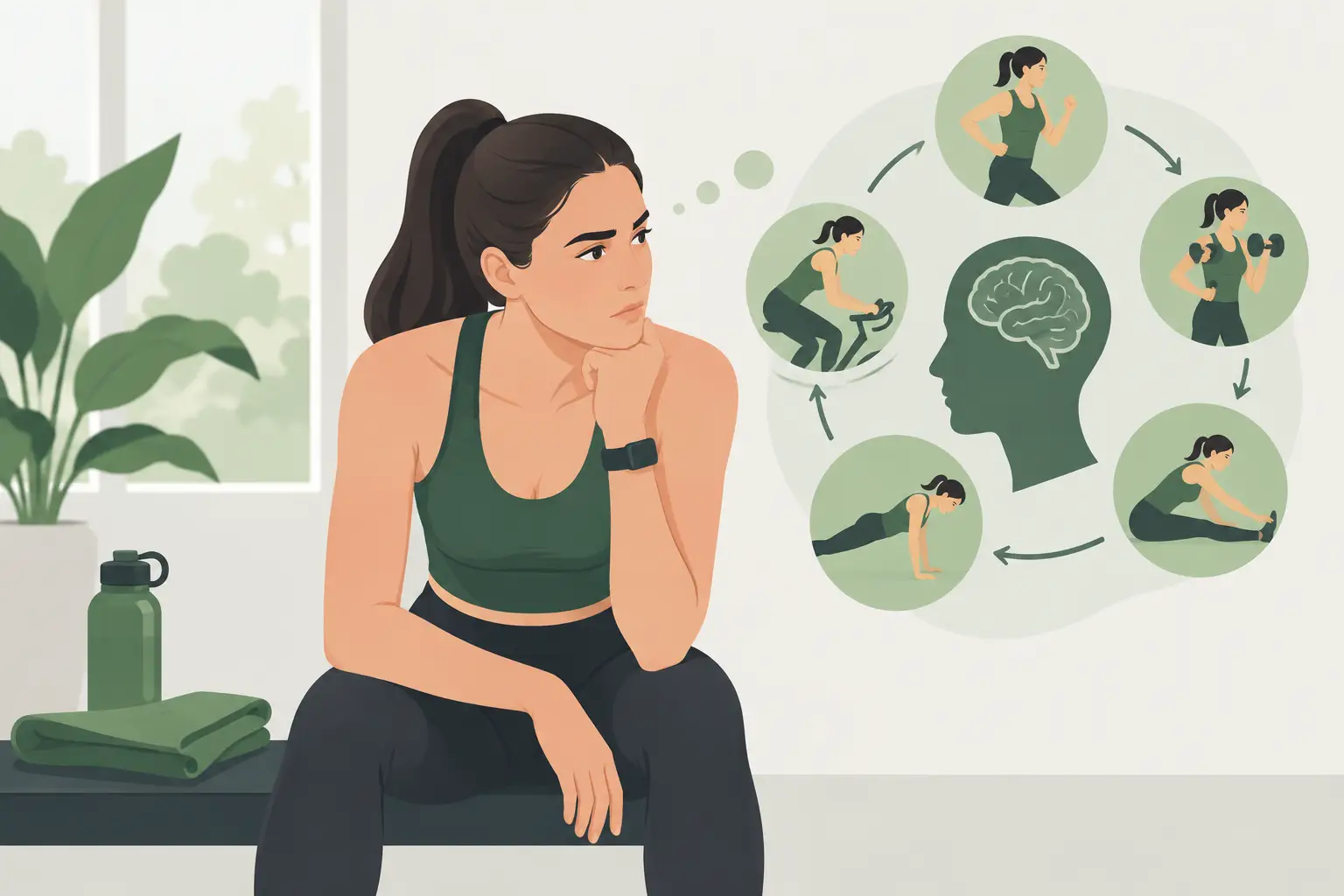
Missing one workout can feel disappointing. Feeling panicked, guilty, or unsafe because you missed it is different. Learning how to recognize compulsive exercise can help you notice when movement has shifted from something that supports your well-being into something that controls your choices, mood, and sense of worth.
Exercise can be joyful, grounding, social, and genuinely helpful for mental health. The concern is not how often someone moves or whether they enjoy training. Compulsive exercise is more about the function exercise serves and what happens when it is not possible to exercise. It can affect people of all body sizes, fitness levels, ages, and genders, including athletes and people who appear highly disciplined from the outside.
What Is Compulsive Exercise?
Compulsive exercise is a pattern of movement driven by distress, rigid rules, or a need to compensate for eating, body image fears, or uncomfortable emotions. A person may continue exercising despite illness, injury, exhaustion, or advice to rest. They may feel temporary relief after a workout, only to experience more anxiety and pressure to repeat the cycle.
This is not a character flaw or a lack of balance. Compulsive patterns often develop as an attempt to cope. Exercise may offer a sense of control during a stressful season, numb difficult feelings, quiet anxious thoughts, or provide reassurance about body size and food. Those benefits can make the pattern difficult to see, especially when our culture often praises pushing through pain and treating rest as laziness.
A regular exercise routine is not automatically compulsive. Someone training for a race, playing a sport, or enjoying daily walks may have a structured schedule and still have flexibility. They can adjust when life, injury, illness, relationships, or recovery call for a change. Compulsion tends to narrow that flexibility.
How to Recognize Compulsive Exercise in Yourself
The most useful question is not, “Do I exercise too much?” It is, “What happens inside me when I cannot exercise exactly as planned?” Your emotional response, the rules you feel compelled to follow, and the consequences of the behavior offer more information than the number of minutes on a fitness tracker.
You may be dealing with compulsive exercise if skipping, shortening, or changing a workout brings intense guilt, irritability, anxiety, shame, or fear. You may exercise when you are injured, sick, severely fatigued, or medically advised to rest. You may feel that movement is something you must earn after eating or something you must do to “make up for” food.
Rigidity is another meaningful sign. Perhaps you cancel plans, arrive late to work, avoid travel, or withdraw from people you care about because a workout cannot be missed. Maybe you have rules about needing to hit a calorie target, close activity rings, exercise at a certain time, or complete a routine even when your body is clearly asking for less.
Other signs can include exercising in secret, feeling unable to enjoy rest, repeatedly increasing intensity to relieve anxiety, or judging yourself harshly when your performance changes. For some people, the behavior is highly visible, such as hours of daily training. For others, it is quieter: pacing after meals, feeling compelled to stand rather than sit, or adding “extra” movement that is not really a choice.
A few difficult days do not necessarily mean you have a disorder. Still, patterns deserve attention when exercise is causing physical harm, emotional distress, conflict in relationships, or interference with school, work, sleep, nourishment, and recovery.
Commitment and compulsion are not the same thing
Healthy commitment allows for adaptation. It can sound like, “Movement matters to me, and today I need a gentler option,” or, “I am disappointed to miss my workout, but rest will help me return stronger.” The routine serves your life and your values.
Compulsion has a more urgent voice. It may sound like, “I have no choice,” “I cannot eat unless I exercise,” or, “Rest means I am failing.” The workout becomes less about strength, enjoyment, skill, or health and more about escaping an emotion or preventing a feared outcome.
This distinction matters for athletes as well. Sport performance often requires dedication, and coaches may set demanding training schedules. Even so, sustainable performance includes recovery, nutrition, medical care, and the ability to communicate about pain or distress. Training through serious injury or hiding food and exercise behaviors is not proof of commitment. It can be a signal that support is needed.
Why Compulsive Exercise Can Be Hard to Spot
Compulsive exercise is often reinforced by compliments. People may praise weight loss, endurance, discipline, or appearance without knowing the internal cost. A person can receive positive feedback while privately feeling trapped, depleted, isolated, or terrified of slowing down.
It can also overlap with anxiety, trauma, perfectionism, obsessive thoughts, and eating disorders. When the nervous system is stuck in a state of threat, intense movement may briefly discharge agitation or create a temporary feeling of control. That relief is real, but it does not necessarily resolve what is underneath.
For young people, compulsive exercise may be mistaken for healthy involvement in sports or a desire to be “fit.” Parents and caregivers can pay attention to sudden distress around rest days, changes in eating patterns, frequent injuries, exhaustion, social withdrawal, or harsh body talk. A calm, curious conversation is more likely to help than accusations or pressure.
A Compassionate First Response
If these patterns sound familiar, start by replacing judgment with honest observation. Notice what tends to happen before the urge to exercise. Is it a meal, an argument, body checking, boredom, a stressful workday, or a feeling of being out of control? Then notice what you expect exercise to fix.
You do not need to force yourself into a perfect relationship with movement overnight. Small moments of flexibility can be meaningful. This might mean taking a true rest day, choosing gentle movement because it feels supportive rather than punishing, eating a meal without adding compensatory exercise, or allowing a workout to end when your body signals fatigue.
It is also wise to involve qualified support, particularly if exercise is tied to restriction, bingeing, purging, significant weight changes, fainting, missed menstrual cycles, injuries, or intense body image distress. A therapist with experience in eating disorders, anxiety, trauma, and body image can help you understand the role exercise has been playing. Depending on your needs, care may also include a physician, registered dietitian, or sports medicine professional.
Therapy can address both the thoughts and the body-based alarm signals that keep the cycle going. Cognitive behavioral strategies may help challenge rigid rules. Somatic and mindfulness-based approaches can build capacity to feel difficult emotions without immediately acting on them. Trauma-informed care can make room for the deeper experiences that may have made control feel necessary in the first place.
When Rest Feels Unsafe
For someone with compulsive exercise patterns, rest is rarely just rest. It can bring up anxiety, restlessness, guilt, or a flood of thoughts about food and body image. This does not mean rest is wrong. It means your system may need support learning that pausing is safe.
Try approaching rest as a skill rather than a test of willpower. Plan a supportive activity during the time you would usually work out: call a friend, take a warm shower, practice a brief grounding exercise, work on a hobby, or sit outside. If stillness feels overwhelming, your treatment team can help you identify medically appropriate, non-compulsive ways to care for your body while recovery is underway.
If you are experiencing chest pain, fainting, severe injury, or thoughts of harming yourself, seek urgent medical or crisis support right away. Physical and emotional safety come first.
You deserve a relationship with movement that adds energy to your life instead of taking it over. The goal is not to become less motivated or to give up what you love. It is to have real choice again – to move, rest, eat, connect, and live from self-respect rather than fear. That kind of freedom is not weakness. It is a powerful way back to you, only better.