
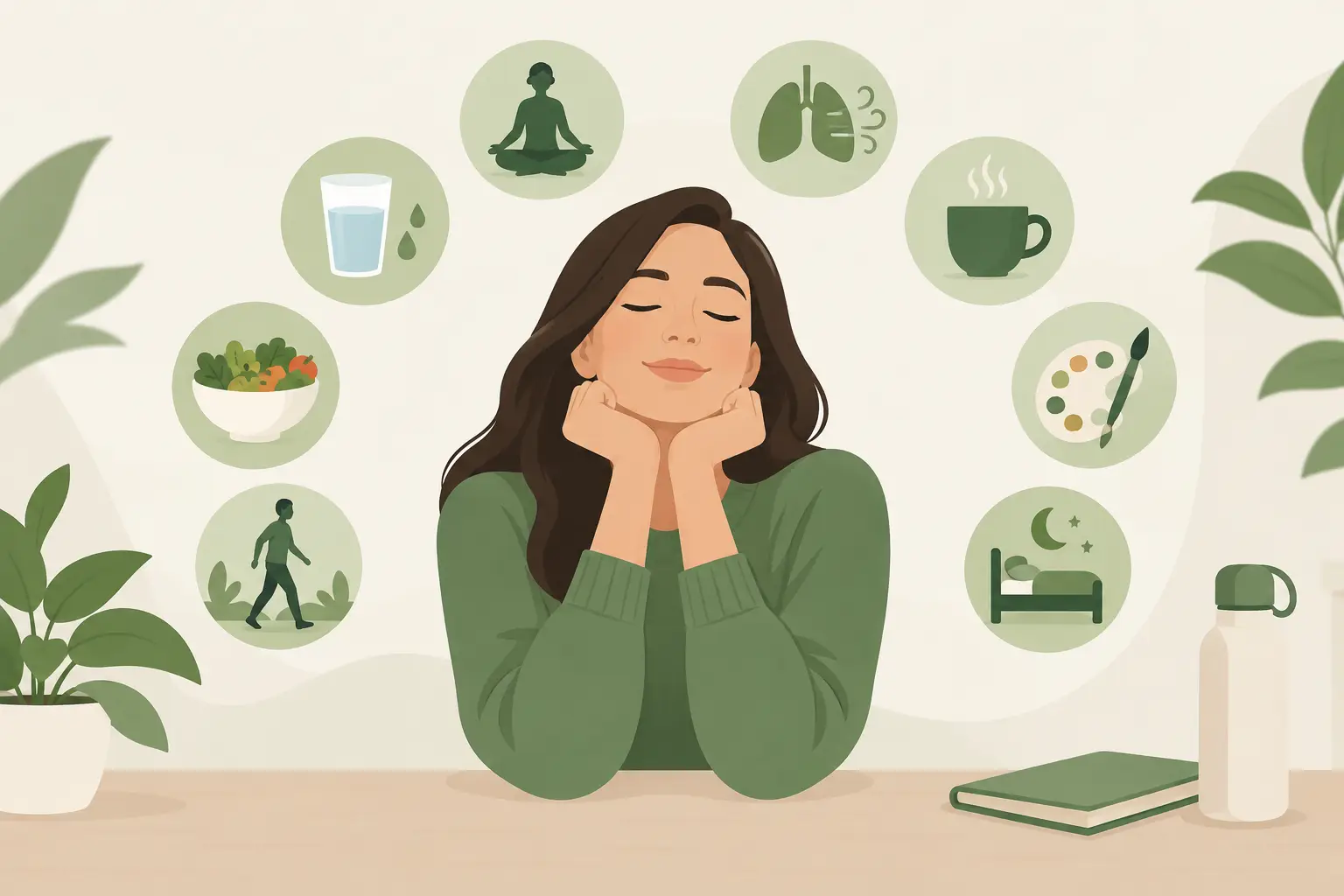
A craving can feel incredibly urgent: a pull toward a drink, a substance, binge eating, restriction, compulsive exercise, shopping, scrolling, or another familiar way of escaping discomfort. The best coping skills for cravings do not require you to be perfectly calm or endlessly disciplined. They help you create enough space between the urge and your next action to choose what truly supports you.
Cravings are not proof that you are failing. They are often a learned brain-and-body response to stress, loneliness, fatigue, conflict, trauma reminders, hunger, or the expectation of relief. You do not have to shame yourself into change. You can learn to meet the craving with curiosity, practical tools, and support.
Why cravings feel bigger than willpower
A craving is more than a thought. It can involve physical sensations, powerful emotions, mental images, memories, and a nervous system that is asking for immediate relief. If a behavior or substance has helped you numb, soothe, belong, or feel in control in the past, your brain may offer it quickly when distress appears.
That is why advice like “just distract yourself” can feel inadequate. Distraction can be useful, but lasting change also involves noticing what the craving is trying to solve. Are you overstimulated? Underfed? Angry? Anxious? Feeling rejected? Carrying a memory in your body that you cannot put into words yet?
When you understand the function of a craving, you can build coping strategies that address the real need rather than only fighting the urge.
The best coping skills for cravings begin with a pause
The first goal is not to make the craving vanish. It is to interrupt autopilot. Even a brief pause helps the thinking part of your brain come back online.
Name what is happening
Try a simple, nonjudgmental statement: “I am having a craving right now.” Not “I am weak,” “I have no control,” or “I already messed up.” Naming the experience creates a little distance between you and the urge.
Then rate the intensity from 0 to 10. This gives you a way to observe the craving rather than become fully absorbed by it. Check again in a few minutes. Many urges rise, peak, and shift like a wave, especially when you stop feeding them with panic or self-criticism.
Ground your body before you negotiate with your mind
Cravings often intensify when your nervous system is in fight, flight, freeze, or shutdown. Reasoning with yourself may be difficult until your body feels safer.
Start with one minute of slower breathing. Let your exhale be a little longer than your inhale. Place both feet on the floor and press down gently. Look around the room and name five neutral things you can see. Hold something cool, splash water on your face, or step outside for fresh air.
These are not magic tricks. They are signals of safety to your nervous system. When your body settles even slightly, you have more choice.
Use urge surfing instead of white-knuckling
Urge surfing is a mindfulness-based skill that asks you to notice the craving as a changing physical experience. Where do you feel it? Is it tightness in your chest, restlessness in your arms, an ache in your stomach, heat in your face, or racing thoughts?
Rather than arguing with the urge, describe it silently: “There is pressure in my throat. It is strong right now. It is changing.” Breathe and stay curious for two or three minutes. The point is not to enjoy the feeling. The point is to learn that an urge can be present without controlling your behavior.
This skill can be especially helpful when cravings are tied to anxiety, eating concerns, or trauma. If turning inward makes you feel more activated or disconnected, choose an outward grounding skill instead, such as calling someone, walking, or focusing on your surroundings.
Meet the need underneath the craving
A useful question is: “What do I need that this craving is promising me?” The answer may be comfort, rest, stimulation, relief, connection, permission to feel, or a break from relentless self-pressure.
You may not be able to meet every need immediately. But identifying it helps you make a more honest plan. If you have not eaten enough, a balanced meal or snack may be the appropriate response. If you are exhausted, a shower, early bedtime, or reducing one demand may help. If you are lonely, sending a direct message to someone safe may be more effective than waiting for the feeling to pass alone.
For some people, cravings show up after conflict. In that case, the next right step may be regulating first and returning to the conversation later with clearer boundaries or a more direct request. A craving does not always mean you need to resist something. Sometimes it means a real need has gone unattended for too long.
Create a realistic 10-minute plan
Cravings thrive on vague promises. “I will be better” is not a plan when your body is screaming for relief. Decide in advance what you will do for the next 10 minutes.
Your plan might include leaving the room where the behavior usually happens, drinking water or eating something nourishing, taking a brisk walk, listening to one grounding song, or doing a short yoga-based movement practice. It could mean brushing your teeth, getting into the shower, or putting your phone across the room. The best option depends on the craving and your history.
Make the plan specific: “For 10 minutes, I will sit on the porch, text my sister, and breathe slowly.” When the 10 minutes are over, reassess. If the urge is still high, repeat the plan or add support. You are not committing to forever. You are supporting yourself through this moment.
Reduce access and increase support
Environment matters. If a substance, app, food, or other trigger is immediately available, your brain has to work much harder to choose differently. Creating friction is not a sign of weakness. It is a practical recovery skill.
Consider what makes the behavior easier to act on and what could add a pause. That might mean not keeping certain substances at home, using app limits, avoiding a triggering route, carrying a planned snack, or setting a boundary around places and people that repeatedly pull you into old patterns.
Support also matters. Identify two or three people you can contact without having to explain everything perfectly. You might say, “I am having a strong craving and need company for 10 minutes,” or “Can you remind me why I wanted to change?” If you attend a recovery group or work with a therapist, keep those contacts visible and easy to use.
Respond to a lapse with information, not punishment
Sometimes you will use the behavior you were trying to avoid. That can bring shame, and shame often fuels the next craving. A lapse does not erase your progress or mean treatment is not working. It is information.
Once you are safe and regulated enough, get curious. What happened in the hours before the urge? Were you hungry, isolated, stressed, triggered, sleep-deprived, or in contact with someone who left you feeling small? What coping skill might have helped earlier in the chain?
Avoid turning this reflection into self-interrogation. The purpose is to strengthen your plan, not to prove that you should have known better. Recovery is built through repetition, repair, and learning.
When cravings need professional support
If cravings are frequent, escalating, connected to substance use, bingeing or purging, self-harm, or trauma symptoms, you do not have to manage them alone. Personalized therapy can help you understand the patterns beneath the urge while building concrete tools for nervous system regulation, emotional processing, and lasting behavior change.
Trauma-informed care is particularly valuable when cravings feel disconnected from logic or appear after body-based reminders, relationship stress, or intense emotions. Approaches such as CBT, mindfulness, somatic therapy, and Internal Family Systems can help you develop a different relationship with the part of you that reaches for relief.
If you may be physically dependent on alcohol, benzodiazepines, or another substance, do not try to stop suddenly without medical guidance. Withdrawal can be dangerous. Seek urgent medical support if you experience severe shaking, confusion, hallucinations, seizures, chest pain, trouble breathing, or thoughts of harming yourself.
A craving is a moment, not a verdict about who you are. Each time you pause, regulate, reach out, or repair, you are practicing a new way of caring for yourself. That practice is how you get back to you, only better.