
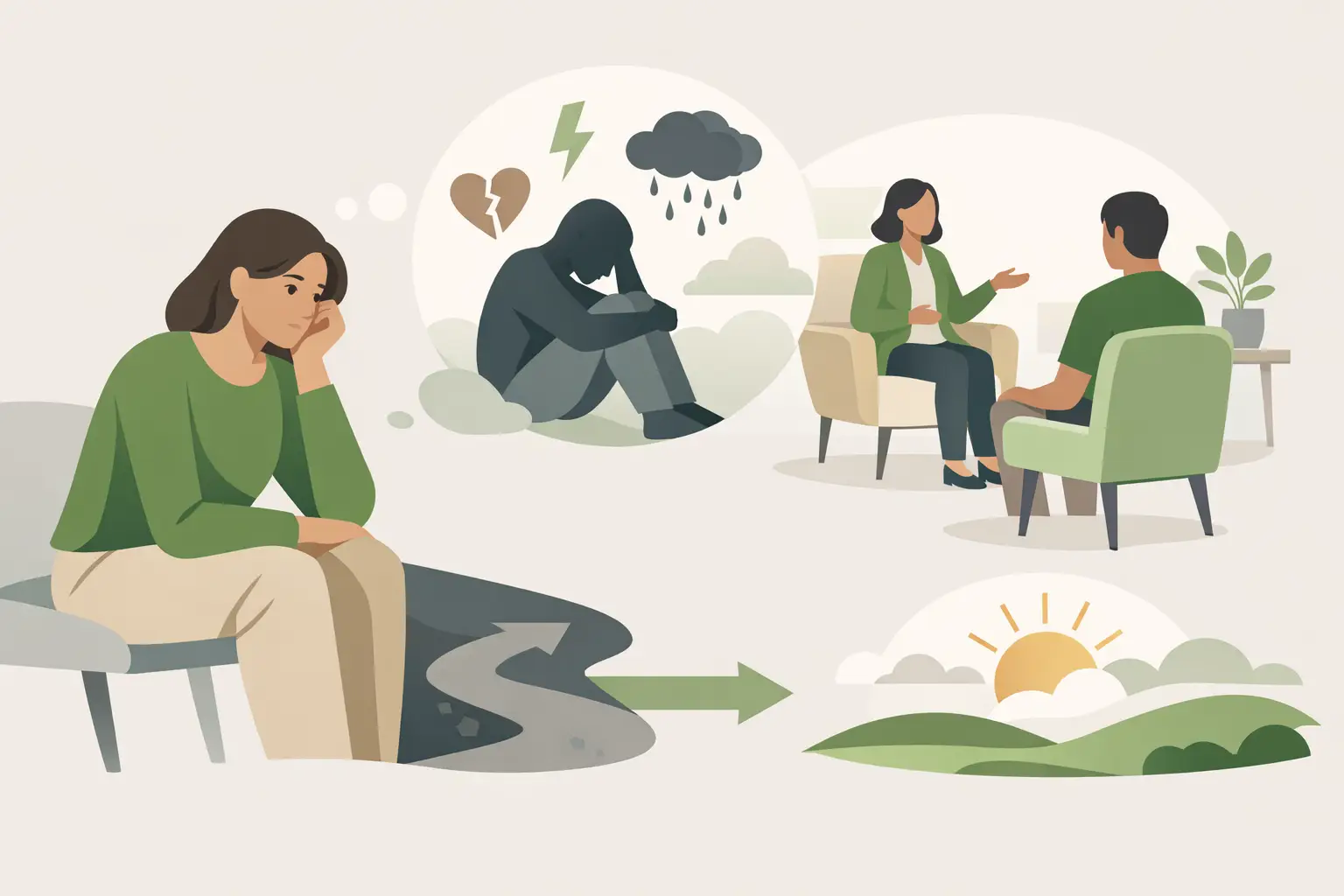
A difficult experience does not have to be recent, dramatic, or easy to explain for it to deserve care. Many people wait because they are functioning at work, caring for their families, or telling themselves they should be over it by now. Yet a nervous system can carry the effects of trauma long after the event has ended.
So, when should you start trauma therapy? Often, the answer is sooner than the moment you feel completely ready. You do not need to hit a breaking point, remember every detail, or have the perfect words. Trauma therapy can begin when you notice that what happened – or what has continued to happen – is affecting how you feel, relate, cope, or move through daily life.
When Should You Start Trauma Therapy?
Trauma therapy may be a good next step when your past is taking up too much space in your present. This can look obvious, such as flashbacks after an assault, accident, loss, or frightening medical event. It can also be quieter: persistent anxiety, a harsh inner critic, trouble trusting people, emotional numbness, or a body that never quite feels safe.
Trauma is not defined only by the event itself. It is also shaped by how overwhelming, isolating, or inescapable the experience felt at the time. Childhood neglect, inconsistent caregiving, betrayal, bullying, chronic criticism, relationship violence, racism, grief, and addiction in the family can all leave lasting patterns. If your system learned to stay on alert, shut down, please others, or disconnect from your needs to get through something, those responses make sense. They may also be exhausting now.
Starting therapy is not an admission that you are broken. It is a practical decision to understand what your mind and body have been carrying and to build new options for responding.
Signs That Support Could Help Now
You do not need a diagnosis to seek trauma-informed care. Still, certain patterns can signal that unresolved experiences may be influencing your well-being.
You may feel persistently on edge, irritable, restless, or unable to relax even when nothing is immediately wrong. You might avoid certain places, conversations, people, sensations, or memories because they bring up a reaction that feels too big to manage. Sleep may be disrupted by nightmares, racing thoughts, or waking with a sense of dread.
For others, the signal is disconnection rather than distress. You may go blank during conflict, struggle to identify what you feel, lose time, feel detached from your body, or find that intimacy is difficult even with people you love. Some people become highly capable and productive while privately feeling numb, depleted, or alone.
Trauma can also show up through eating concerns, body image distress, substance use, panic, perfectionism, people-pleasing, or relationship patterns that repeat despite your best intentions. These are not character flaws. They can be protective strategies that once helped you survive, gain control, or avoid pain.
If these patterns are narrowing your life, affecting your relationships, or making it harder to be the person you want to be, you do not have to wait for them to worsen before reaching out.
You Do Not Have to Tell the Whole Story Right Away
A common fear is that trauma therapy means immediately revisiting the worst moments in detail. Thoughtful trauma treatment does not work that way. A skilled clinician considers pacing, emotional capacity, current stressors, and your sense of safety before moving into difficult material.
Early sessions may focus on understanding your goals, identifying triggers, strengthening boundaries, and learning how your nervous system responds to stress. You may practice grounding, breathing, mindfulness, or body-based techniques that help you return to the present when emotions intensify. This foundation matters. Processing trauma without enough support or stability can feel overwhelming, while avoiding it forever can keep old patterns in charge.
The right pace is not about pushing through discomfort to prove strength. It is about building enough internal and external safety that healing becomes possible. Sometimes that means beginning with practical coping skills. Sometimes it means addressing active anxiety, substance use, eating disorder symptoms, or an unsafe relationship first. There is no prize for moving faster than your system can handle.
Timing Depends on Your Current Safety and Stability
There is a difference between starting therapy and beginning intensive trauma processing. You can start therapy at nearly any point by getting support, creating a plan, and assessing what would help most. More focused work with traumatic memories may need to wait if you are in immediate danger, actively being harmed, severely sleep-deprived, or unable to meet basic needs.
This is not a reason to postpone care. It is a reason to receive the kind of care that fits your current reality. If you are living with ongoing abuse or coercion, a therapist can help you think through safety, resources, support systems, and next steps without judgment. If you are in early recovery from addiction, trauma-informed treatment can help you develop regulation skills that support recovery rather than intensify urges.
For young people, timing also involves the adults around them. Changes in mood, school performance, sleep, friendships, eating, or behavior can be signs that a child or teen needs a safe place to talk. Early support can help them name what is happening and develop skills before painful patterns become more entrenched.
What Trauma Therapy Can Look Like
Trauma therapy is not one method or one conversation. Effective care is personalized to your history, needs, culture, strengths, and goals. Talk-based approaches such as cognitive behavioral therapy can help you recognize the thoughts and beliefs that developed around trauma, including beliefs like “I am not safe,” “It was my fault,” or “I cannot trust anyone.”
Other approaches work more directly with the emotional and physical imprint of stress. Somatic therapy can help you notice tension, shutdown, agitation, or dissociation in the body and develop ways to respond with greater steadiness. Mindfulness and yoga-based practices may support nervous system regulation when they are adapted carefully and offered with choice.
Internal Family Systems can be helpful for people who feel pulled in different directions: one part wants closeness, another part wants to run; one part wants to stop drinking or restricting food, while another part is scared to let go of the coping strategy. Rather than treating those parts as problems, therapy can approach them with curiosity and compassion.
The goal is not to erase your history or force forgiveness. It is to reduce the power of old experiences over your present choices. Over time, many people feel more grounded in their bodies, clearer in their boundaries, less reactive in relationships, and more able to pursue the life they want.
How to Know You Are Ready Enough
“Ready” rarely feels like certainty. More often, it sounds like, “I cannot keep doing this alone,” or “I want things to be different, even though I am scared.” You may be ready enough if you can identify a few reasons you want support, commit to showing up as consistently as your circumstances allow, and practice skills between sessions when appropriate.
You are also allowed to be ambivalent. It is normal to want relief while worrying about what therapy might uncover. A good therapist will not interpret hesitation as resistance or pressure you into sharing before trust has been built. Therapy is collaborative. You can ask about a clinician’s approach, discuss what helps you feel safe, and say when something feels like too much.
If you are having thoughts of harming yourself or someone else, cannot stay safe, or are experiencing a mental health crisis, seek immediate emergency support by calling or texting 988 in the United States, calling 911, or going to the nearest emergency room. Trauma therapy is valuable, but urgent safety needs deserve urgent care.
Starting Can Be a Turning Point
You may not be able to change what happened. You can change how much it gets to define your days, your relationships, and your relationship with yourself. With personalized, evidence-based support, healing can include both insight and action: understanding your patterns, regulating your nervous system, and practicing new ways of living.
You do not have to wait until your pain is visible to everyone else. If a part of you is asking for more peace, connection, or freedom, that is reason enough to begin. Investing in you always pays off – and healing can be the path back to you, only better.