
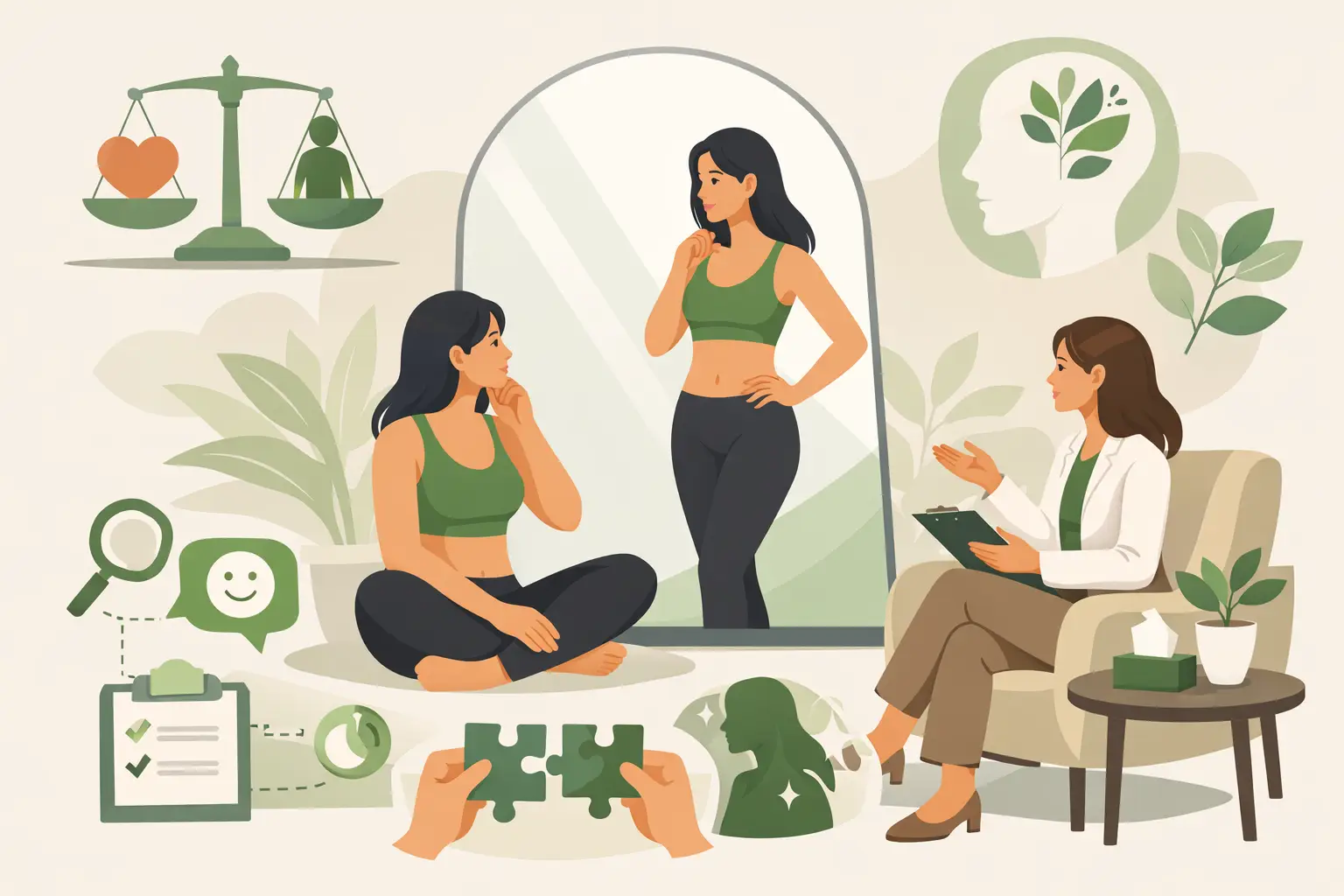
A mirror can become a courtroom. You may examine your stomach, skin, shape, or weight and immediately hear a harsh internal verdict. You may avoid photos, cancel plans, change outfits five times, or feel that a “good” day depends on how your body looks. If you are asking, is body image therapy effective, you are likely looking for more than reassurance. You want to know whether this pain can actually change.
For many people, the answer is yes. Body image therapy can be highly effective when it is personalized, evidence-based, and focused on the patterns beneath body dissatisfaction – not just on telling yourself to “love your body.” Progress often means less time consumed by body checking, comparison, food rules, avoidance, and shame. It can also mean feeling more present in your relationships, work, movement, and daily life.
Is body image therapy effective for everyone?
Body image therapy is not one single treatment, and effectiveness depends on what is driving the distress. For one person, body dissatisfaction may be closely tied to an eating disorder. For another, it may be connected to trauma, anxiety, perfectionism, bullying, chronic pain, hormonal changes, social media pressure, or years of critical family messages about weight and appearance.
That is why a one-size-fits-all approach can fall short. Positive affirmations may feel encouraging to some people, but they can feel unbelievable or even frustrating when someone is living with intense body shame. Real change usually requires more than replacing one thought with another. It involves understanding the beliefs, emotions, nervous system responses, and protective behaviors that keep the struggle going.
Research supports several approaches for body image concerns, particularly cognitive behavioral therapy, eating disorder-focused treatment, mindfulness-based work, and compassion-focused interventions. Trauma-informed and somatic approaches can also be valuable when the body has become associated with fear, judgment, loss of control, or past harm.
Therapy is especially important when body image distress is affecting eating, exercise, mood, relationships, school, work, or your ability to participate in life. If restrictive eating, binge eating, purging, compulsive exercise, or significant weight changes are present, treatment should include a clinician experienced in eating disorders. Some clients also benefit from coordinated support with a medical provider and registered dietitian.
What effective body image therapy actually works on
The goal is not to convince you that you must feel beautiful every day. A more realistic and freeing goal is body respect: the ability to care for your body and live in it without allowing appearance concerns to run your life.
The thoughts that make appearance feel like worth
Cognitive behavioral therapy, often called CBT, helps identify the automatic thoughts that intensify body distress. These thoughts may sound like, “Everyone is judging me,” “I cannot wear that until I lose weight,” or “If my body changes, I will not be lovable.”
Therapy examines these beliefs with care and honesty. You learn to notice thinking patterns such as all-or-nothing thinking, mind reading, comparison, and attaching your worth to a number on a scale or a clothing tag. Then you practice more balanced responses that are not fake positivity, but grounded in reality.
For example, a client may move from “I cannot be seen in this outfit” to “I feel exposed and uncomfortable right now, but discomfort does not mean I am doing something wrong.” That shift creates room for choice.
The behaviors that keep the cycle alive
Body image distress is often maintained by behaviors intended to bring relief. Checking the mirror repeatedly, pinching areas of the body, weighing yourself multiple times a day, seeking reassurance, scrolling comparison-heavy content, body avoidance, and rigid food or exercise rules may calm anxiety briefly. Over time, they teach the brain that appearance is a threat requiring constant monitoring.
Effective therapy helps you gradually reduce these behaviors while building skills to tolerate the discomfort that initially follows. This is not about forcing yourself into situations before you are ready. It is a paced process of learning that you can wear the clothes, attend the event, eat the meal, or be in the photo without obeying body-image fear.
The emotions and experiences held in the body
For some people, body hatred is not only about appearance. It is a language for grief, anger, vulnerability, fear, or a need to feel in control. Trauma can further complicate the relationship with the body. A person may feel disconnected from physical sensations, hyperaware of perceived flaws, or unsafe being noticed.
Trauma-informed therapy makes space for these realities. Approaches such as Internal Family Systems can help you understand the part of you that criticizes, restricts, hides, or pushes hard for control. Rather than treating that part as the enemy, therapy explores what it is trying to prevent and helps you develop safer, more compassionate ways to cope.
Somatic therapy, mindfulness, and yoga-based practices may help restore a sense of connection to the body without making appearance the focus. The work might involve noticing your breath, recognizing early signs of overwhelm, practicing grounding, or choosing movement based on what feels supportive rather than what you believe you need to “earn.”
What progress can look like
Body image healing is rarely a straight line. You may still have difficult mirror days, feel activated by a photo, or notice a comparison thought. Effectiveness does not mean those experiences disappear forever. It means they become less powerful, less frequent, and less likely to dictate your behavior.
Meaningful progress may look like eating with more flexibility, wearing clothes that fit your current body, speaking to yourself with less cruelty, or going to the pool with your children instead of sitting on the sidelines. It may mean setting boundaries around appearance comments, reducing compulsive exercise, or being able to receive affection without wondering what someone sees wrong with you.
For young people, progress can include returning attention to friendships, school, sports, and interests rather than spending hours focused on food, weight, or perceived flaws. In both adolescents and adults, the deeper outcome is greater freedom: a life that is larger than body surveillance.
How long does body image therapy take?
There is no honest universal timeline. Someone with mild but persistent dissatisfaction may notice useful shifts in several months. Someone recovering from an eating disorder, trauma, or long-standing shame may need more time and a more comprehensive treatment plan.
Consistency matters more than rushing. Therapy works best when sessions are paired with small, repeated practice between appointments. That might mean reducing one checking ritual, using a grounding skill before getting dressed, keeping social media boundaries, or responding differently after a body-critical thought appears.
The right pace also matters. Pushing too hard can increase shame or trigger eating disorder behaviors. Avoiding every discomfort can preserve the problem. A skilled therapist helps you find the middle path: challenging enough to create change, steady enough to feel safe.
Choosing support that fits your needs
Look for a therapist who understands body image as more than a confidence issue. Ask whether they have experience with eating disorders, trauma, anxiety, and compulsive behaviors if those are part of your experience. You deserve care that considers your relationship with food, movement, identity, family messages, health concerns, and nervous system – not just your reflection.
At a personalized practice, treatment may combine CBT with trauma-focused therapy, mindfulness, somatic regulation, and compassion-based work. The particular blend should be based on you. A highly driven athlete, a parent struggling with postpartum body changes, a teen overwhelmed by comparison, and an adult healing from trauma may all need different entry points.
You do not have to wait until your body image struggle looks “serious enough.” If appearance concerns are shrinking your life, taking up your mental energy, or making it hard to feel at home in yourself, that is enough reason to seek support.
Your body is not a problem you need to solve before you are allowed to participate fully in your life. With the right help, you can learn to meet difficult thoughts with steadiness, care for yourself without punishment, and get back to you – only better.