
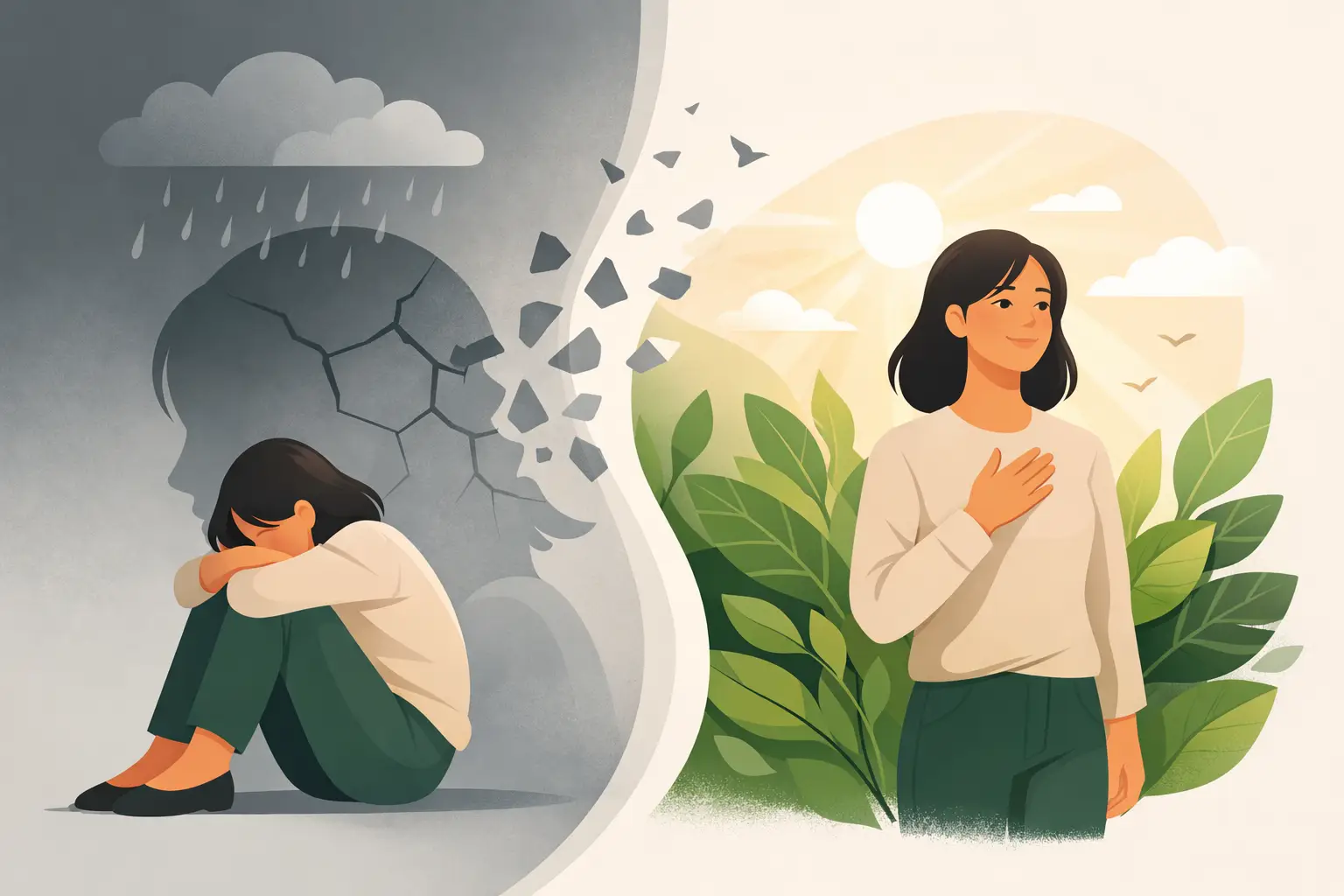
You might notice it in small, unsettling ways. You go through the motions at work, answer texts, handle responsibilities, and even say you are “fine,” but inside there is very little feeling at all. Or maybe the only feelings that break through are irritability, emptiness, or exhaustion. If you are wondering how to stop emotional numbing, the first thing to know is this: numbness is not a character flaw. It is often a protective response.
Emotional numbing can happen after trauma, during chronic stress, in depression, with anxiety, during burnout, or as part of substance use and recovery. Sometimes it shows up after years of having to be strong, helpful, high-performing, or disconnected from your own needs. Your system learns that feeling less is safer than feeling everything.
That response makes sense. But if numbness has become your normal, it can leave you disconnected from joy, intimacy, motivation, and your own inner signals. Healing is not about forcing yourself to feel more all at once. It is about helping your nervous system experience enough safety that emotion can return in manageable ways.
What emotional numbing really is
Emotional numbing is a form of disconnection. You may feel detached from yourself, other people, or the world around you. Some people describe it as being flat, shut down, foggy, or like they are watching life from behind glass. Others still function well on the outside but feel little access to sadness, pleasure, excitement, grief, or love.
This often has a nervous system component. When your body perceives overwhelm or threat, it may move into a protective state that reduces sensation, emotion, and connection. In trauma therapy, we often see numbness not as resistance, but as adaptation. Your system found a way to survive.
That is why trying to “snap out of it” rarely works. Shame usually makes numbness worse. Pressure can do the same. What helps is a steadier, more compassionate approach that builds capacity over time.
How to stop emotional numbing without overwhelming yourself
If you want to know how to stop emotional numbing, start by shifting the goal. The goal is not emotional intensity. The goal is emotional reconnection with safety, choice, and regulation.
That means going slowly enough that your body does not feel flooded. For some people, numbness lifts in layers. First they notice physical sensations. Then they recognize stress sooner. Then they feel brief moments of sadness, relief, or pleasure. Progress is often subtle before it becomes obvious.
Start with the body, not just your thoughts
When people feel numb, they often try to think their way back to feeling. But emotions are not only cognitive events. They are also physical experiences. If your body has gone offline, insight alone may not be enough.
Begin with simple sensory check-ins. Notice your feet on the floor. Hold a warm mug. Take a slightly longer exhale than inhale. Stretch your shoulders. Step outside and feel the air on your skin. These are not throwaway wellness tips. They are ways of helping the nervous system register the present moment.
The key is gentle contact, not intensity. If body-focused work feels uncomfortable or activating, that matters. For trauma survivors especially, some exercises can feel too exposed too soon. In those cases, working with external sensations, movement, or grounding through the environment may feel safer than closing your eyes and scanning inward.
Name what is there, even if it is “nothing”
Many people assume healing starts once they can clearly identify their emotions. In reality, it can start with honest observation. You might say, “I feel blank,” “I feel far away,” or “I do not know what I feel, but my chest is tight.” That is meaningful data.
Putting language to your inner state helps create connection between experience and awareness. This is one reason therapy, journaling, and emotionally attuned conversations can be so powerful. You are not forcing a feeling. You are making space to notice what is already there.
If words feel hard to find, use a scale. Ask yourself how connected you feel right now from 0 to 10. Ask whether you feel more shut down, more agitated, or somewhere in between. Simple tracking builds self-awareness without demanding too much.
Reduce what keeps you numb
Sometimes numbness is not only trauma-related. It can also be reinforced by habits that keep you disconnected. Overworking, constant scrolling, using food or substances to regulate, staying chronically busy, and avoiding rest can all mute emotional experience.
This does not mean these behaviors are bad or that you should shame yourself for them. It means they may be serving a function. If you remove them too quickly without replacing the support they provide, your system may feel exposed.
A better question is: what is this habit helping me not feel, and what safer support can I add? Maybe that looks like reducing alcohol while increasing therapy support. Maybe it means less nighttime scrolling and more predictable sleep. Maybe it means carving out ten quiet minutes in the car before going into the house so your body has time to transition.
Rebuild emotion through safe connection
Emotions come alive in relationships. If you have been hurt, neglected, criticized, or had to hide parts of yourself to stay connected, emotional numbing may be tied to relational survival. In that case, healing often happens in relationship too.
Safe connection does not require a dramatic heart-to-heart. It may begin with one person who feels steady, respectful, and non-intrusive. It might be a therapist, partner, friend, coach, or family member who can sit with your experience without trying to fix or rush it.
If closeness makes you want to pull away, that does not mean you are broken. It may mean your system learned that vulnerability was costly. Moving slowly, setting clear boundaries, and practicing small moments of honesty can help rebuild trust without overwhelming you.
When emotional numbing is a sign you need support
There are times when self-help is not enough. If numbness has lasted for weeks or months, is affecting your relationships or work, follows trauma, comes with panic or dissociation, or is tied to depression, self-harm, or substance use, professional support can make a real difference.
Trauma-informed therapy is especially important when numbness is connected to past experiences your body has never fully processed. Evidence-based approaches like CBT, trauma-focused therapy, somatic therapy, mindfulness-based work, and Internal Family Systems can help you understand the pattern while also creating actual change. The right support should help you feel safer in your own mind and body, not judged for how you have coped.
For some people, numbness is also connected to medication changes, medical conditions, grief, or major life transitions. It is worth taking the full picture seriously. Emotional disconnection is not something to minimize just because you are still functioning.
What healing can look like
Healing from emotional numbing is rarely dramatic at first. Often it begins with small returns. Music affects you again. You laugh and mean it. You notice tension before it becomes shutdown. You feel sadness and realize that, while painful, it is also a sign of reconnection. You start to recognize what you need instead of only what others need from you.
This is where many people get discouraged. Feeling again can include uncomfortable emotions before it includes more pleasure and ease. That does not mean you are getting worse. It may mean your system is thawing. The work is to build enough support, regulation, and self-trust that feelings become information instead of emergencies.
If you are in Katy, Cinco Ranch, Fulshear, or the greater Houston area, working with a trauma-informed therapist can help you move through this process with more clarity and less guesswork. You do not have to figure out every layer alone.
Emotional numbing once helped you survive something. You can respect that protection and still decide you want more from life now. Feeling more is not about becoming fragile. It is about becoming available to yourself again, one safe step at a time.