
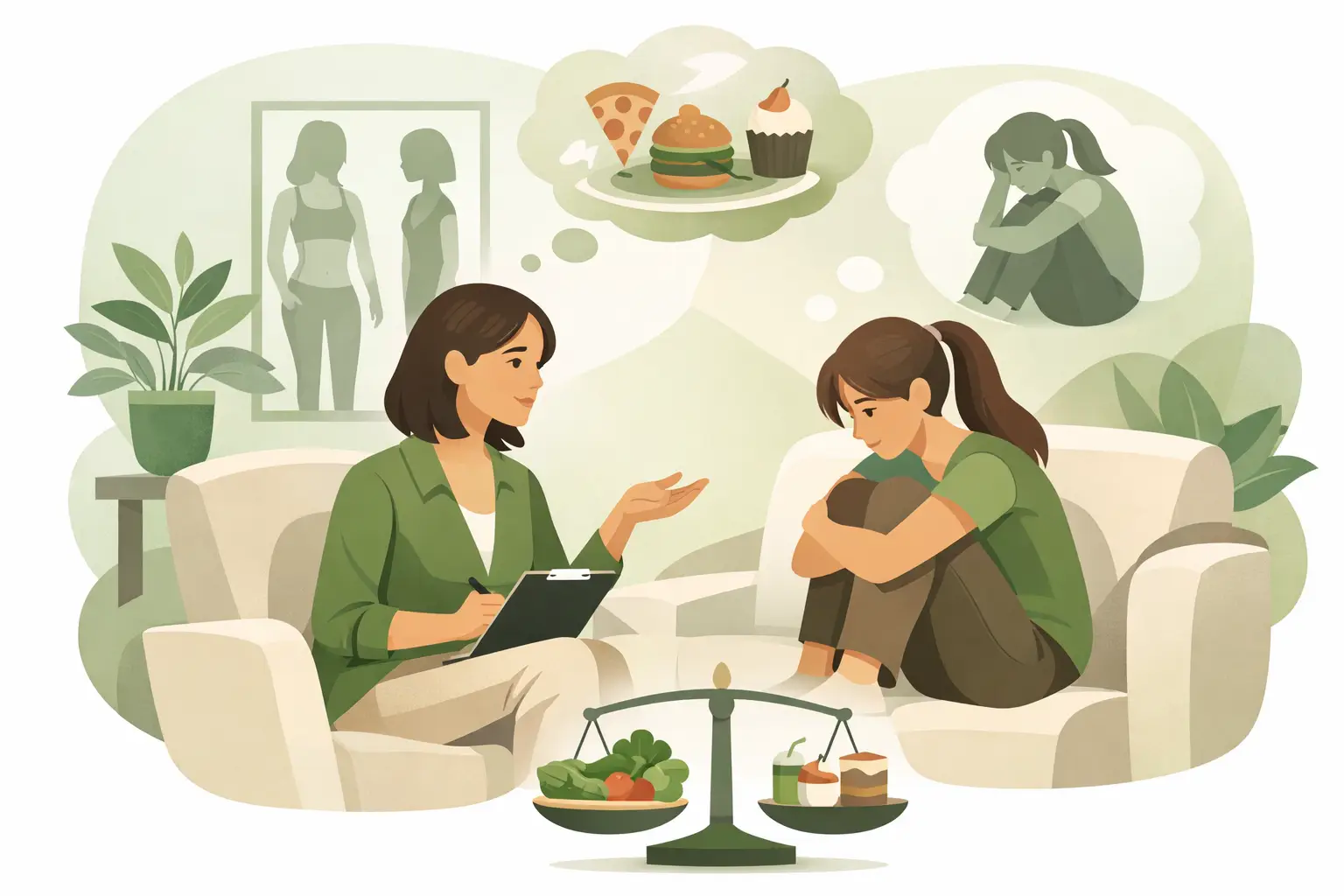
A teen who suddenly skips family meals, panics over a change in routine, or seems consumed by calories, exercise, or body checking is not just “being difficult.” Often, something deeper is happening. Eating disorder counseling for teens can be a turning point because these struggles are rarely only about food. They are often tied to anxiety, perfectionism, trauma, shame, control, identity, and a nervous system that no longer feels safe.
For parents, this can feel confusing and frightening. For teens, it can feel isolating, exhausting, and hard to explain. The good news is that effective help exists, and early support matters. With the right counseling approach, recovery is not only possible. A young person can build a more stable relationship with food, their body, and themselves.
What eating disorder counseling for teens really addresses
When people think about eating disorders, they often picture visible weight changes or a dramatic relationship with food. Sometimes those signs are present, but not always. A teen can be struggling significantly while appearing high-achieving, disciplined, or even “healthy” from the outside.
Counseling looks beyond the behavior to understand what is driving it. Restricting food, bingeing, purging, compulsive exercise, or obsessing over body size often serve a function. They may numb distress, create a sense of control, reduce anxiety, or manage painful emotions that feel too big to hold.
That is why good treatment does more than tell a teen to eat differently. It helps them recognize patterns, understand triggers, regulate emotions, challenge distorted beliefs, and rebuild trust in their body. In many cases, it also means addressing trauma, family stress, social pressure, or perfectionism that has been fueling the problem beneath the surface.
Signs a teen may need counseling
Some warning signs are easy to miss because they can hide inside habits that seem common in adolescence. A teen might become rigid about food rules, avoid meals with other people, withdraw socially, or show intense distress around eating in public. Others become preoccupied with labels like clean eating, dramatically increase exercise, or tie their worth to a number on the scale.
Mood changes also matter. Irritability, secrecy, anxiety, depression, trouble concentrating, and sudden defensiveness around food or appearance can all be part of the picture. So can frequent body checking, comparing, or comments that suggest deep dissatisfaction with their body.
Not every teen with these signs has a diagnosable eating disorder. But waiting for things to become severe is rarely the best move. If food, weight, shape, or control is taking up too much emotional space, counseling is worth considering.
Why a teen-focused approach matters
Teenagers are not just smaller adults. They are still developing cognitively, emotionally, socially, and physically. Their treatment needs to reflect that.
A teen may understand that a behavior is harmful and still feel unable to stop. They may want help but shut down if they feel judged or pushed too hard. They may also depend on parents for structure while needing privacy and autonomy to engage honestly in therapy. That balance is delicate.
Effective eating disorder counseling for teens meets them where they are. It creates safety first, because change usually does not happen when a young person feels controlled, criticized, or misunderstood. The work needs clinical depth, but it also needs flexibility, warmth, and respect for the fact that adolescence is a season of intense change.
What treatment may include
There is no single formula that works for every teen. The most effective counseling is personalized, because eating disorders do not all come from the same place.
Cognitive behavioral therapy can help teens identify distorted thoughts about food, shape, worth, and control, then practice more realistic and supportive ways of thinking. This can be especially useful when rigid rules and fear-based beliefs are driving eating behaviors.
Trauma-informed therapy may be essential when the eating disorder developed alongside overwhelming experiences, chronic stress, or a history of feeling unsafe. In those cases, food behaviors may be tightly connected to survival responses. Treating the symptom without addressing the underlying stress response often falls short.
Somatic approaches can also make a real difference. Many teens with eating disorders feel disconnected from hunger, fullness, emotion, and bodily cues. Learning to notice physical sensations without panic can help restore regulation. Mindfulness and body-based practices, when used carefully and appropriately, can support a teen in feeling more grounded rather than more self-critical.
Internal Family Systems-informed work may help teens understand conflicting parts of themselves. One part may crave control, while another feels ashamed, overwhelmed, or deeply lonely. Framing the struggle this way can reduce blame and create more compassion, which is often a powerful shift in recovery.
Family involvement may also be part of treatment, though the degree depends on the teen’s age, symptoms, and needs. Parents do not cause eating disorders, but family support can play a major role in recovery when it is informed, calm, and consistent.
The role of parents without becoming the food police
Parents often feel pressure to monitor everything. That instinct makes sense. At the same time, constant scrutiny can escalate conflict and secrecy if it turns every meal into a battle.
Usually, teens need both support and structure. Parents can help by creating predictable meal routines, reducing judgmental commentary about food and bodies, and responding to distress with curiosity rather than lectures. It helps to focus less on winning arguments and more on building trust.
This does not mean stepping back when things are serious. Some situations require close support, medical care, and clear intervention. But even then, the goal is not punishment. The goal is helping a teen feel safe enough to accept care.
A skilled counselor can guide parents on what to say, what not to say, and how to support recovery without reinforcing the disorder. That kind of coaching matters because even loving families can get pulled into patterns of fear, power struggles, or reassurance cycles that unintentionally keep the problem going.
Recovery is not linear, and that is not failure
One of the hardest parts of this process is that progress rarely happens in a straight line. A teen may do well for a while, then regress during a stressful season, a body change, a relationship issue, or a transition at school. That does not mean therapy is not working.
Recovery often involves learning how to respond differently when old triggers show up. It takes repetition. It takes support. It also takes patience, because an eating disorder can become deeply tied to identity and coping. Letting go of it may bring relief, but it can also bring grief and fear.
This is where a compassionate, evidence-based approach matters most. Teens do not need shame. They need a space where honesty is welcomed, setbacks are understood in context, and real skills are built over time.
When to seek more immediate help
Some signs suggest a need for urgent assessment, including fainting, significant food refusal, purging, rapid weight changes, chest pain, severe depression, or suicidal thoughts. Eating disorders can affect the heart, digestion, hormones, concentration, and overall medical stability. Therapy is a key part of treatment, but sometimes it needs to happen alongside medical monitoring and nutritional support.
If you are in the Katy or West Houston area and looking for specialized support, working with a clinician who understands eating disorders, trauma, anxiety, and nervous system regulation can make treatment far more targeted and effective. That whole-person lens matters because teens do better when care addresses both what is visible and what is driving it.
What healing can look like
Healing does not mean a teen never has a hard day with food or body image again. More often, it means food takes up less mental space. The body becomes less of a battleground. Emotions feel more manageable. Relationships improve. Life gets bigger than the disorder.
A teen in recovery may begin to trust their hunger again, tolerate uncertainty with less panic, and speak to themselves with more honesty and less cruelty. They may become more flexible, more present, and more connected to who they are beyond appearance or performance.
That is the deeper promise of counseling. It is not just symptom reduction, though that matters. It is helping a young person return to themselves with more resilience, awareness, and freedom.
If your teen is struggling, you do not need to wait for things to get worse before reaching out. Early, personalized care can change the course of recovery, and investing in that support now can help them get back to themselves, only better.